






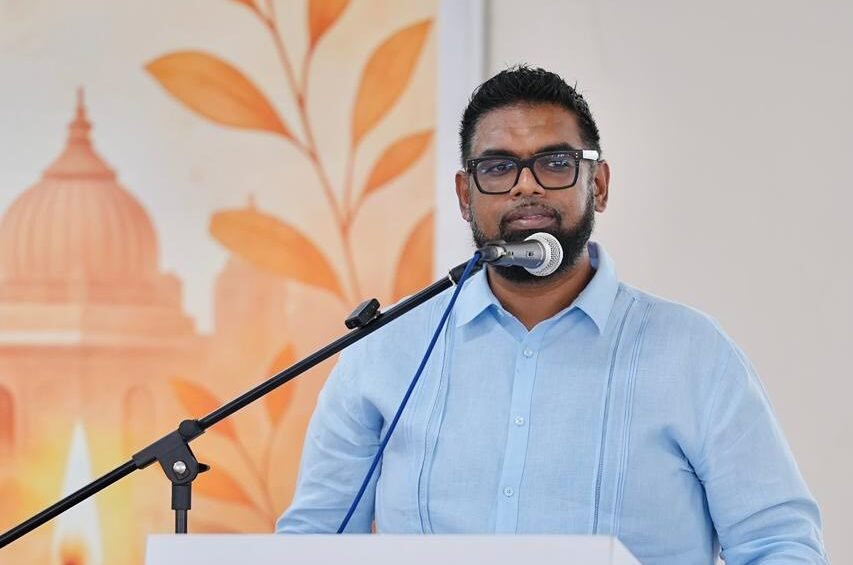
President Dr Irfaan Ali has outlined a transformative direction for Guyana’s transport sector, revealing that the government is actively exploring the development of a modern mass transit system to support the country’s rapidly expanding infrastructure and economy.
Speaking at a recent commissioning event, the Head of State emphasised that although major investments continue in highways and road expansion, these measures alone will not be sufficient to meet the demands of a fast-developing nation.
“But while we are building roads to meet existing demand and to prepare for future growth, we also recognise that roads alone cannot carry the full burden of a modern and expanding nation,” he said.
The President explained that the government is now pursuing a more comprehensive, integrated transport strategy to improve mobility, ease congestion, and enhance efficiency for commuters nationwide.
“That is why our plans go beyond highways and bridges. We are actively examining the development of an integrated mass transit system to complement our road networks, reduce congestion, shorten travel times, and improve citizens’ daily lives,” he said.
As part of this forward-looking approach, several options are under serious consideration, including introducing a light rail system for densely populated areas, expanding bus services, and redesigning routes to reduce pressure on existing roadways.
“This is why we’re giving serious consideration to options such as light rail systems for high-density corridors and larger, modern buses for longer-distance services, including routes to rural and hinterland communities,” the President said.
He noted that these initiatives are part of a wider national vision to modernise the transport sector in line with Guyana’s rapid urbanisation and economic progress.
“The future of transport is not only about moving vehicles; it is about moving people,” President Ali said, adding that an effective system must be safe, affordable and accessible.
Dr Ali highlighted that the proposed mass transit system will not replace existing infrastructure but will work in tandem with ongoing and planned road projects to create a more balanced and efficient network.
“Our vision is clear: A Guyana where roads, public transport and smart planning work together in harmony, because the best transport network is one that gives people choices, saves them time and connects every citizen to opportunity,” he said.
The government continues to advance an ambitious infrastructure agenda, investing billions in highways, bridges, and road upgrades to strengthen national connectivity and support economic growth.
While acknowledging the temporary disruptions caused by ongoing construction, the President urged citizens to remain patient, emphasising that these efforts are part of a long-term transformation.
“We ask for your patience because today’s patience will produce prosperity tomorrow… the traffic you endure today will become the travel you enjoy tomorrow,” he said.
With population growth and rising vehicle ownership placing greater pressure on existing systems, President Ali emphasised the importance of proactive planning to prevent future congestion and inefficiencies.
“These are not ideas for tomorrow alone. They are part of the groundwork we are laying today,” said President Ali.
It is important to note that the President has recognised the need for a comprehensive transport system in Guyana. Guyana is among a handful of countries that lack a proper national bus system. Hopefully, soon, the citizens of Guyana will travel in air-conditioned buses and other forms of transport mentioned by the President.