







In a significant step towards enhancing energy efficiency and sustainability, the Guyana Energy Agency (GEA) and Guyana Power and Light (GPL) have launched a collaborative Demand Side Management (DSM) Programme aimed at transforming electricity consumption across Guyana.
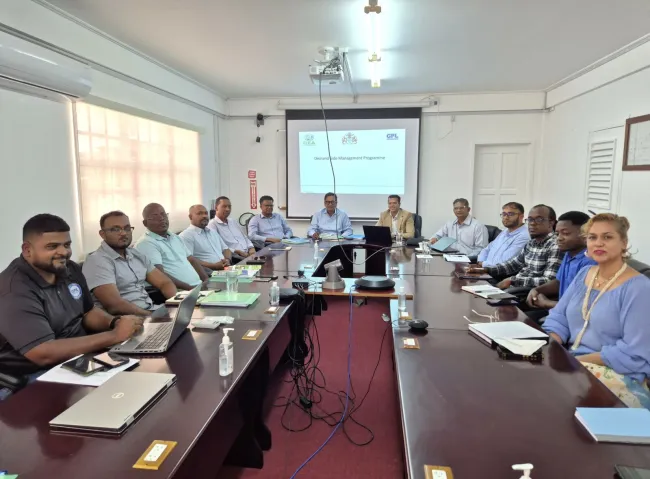
The initiative was formally discussed during an inaugural meeting held last Thursday at GPL’s headquarters, where senior officials and technical teams from both agencies congregated to establish the groundwork for the programme’s implementation. Among those present were GEA’s Chief Executive Officer, Mahender Sharma, and GPL’s Head of Executive Management, Kesh Nandlall, who led their respective delegations.
Demand side management aims to influence how consumers use electricity, promoting efficiency and conservation instead of solely increasing power generation capacity. By guiding consumers to modify their usage patterns, the programme strives to reduce overall demand, lessen pressure on the national grid, enhance system reliability, and decrease emissions from the power sector.
Officials from both agencies agreed that the initiative has strong potential to significantly enhance energy efficiency across the country while encouraging more responsible consumption habits among households and businesses.
A key element of the programme is promoting energy-efficient technologies and appliances. Consumers will be encouraged to adopt modern, low-energy equipment such as inverter air conditioning units and efficient refrigerators, as well as replace outdated appliances that consume excessive power. The initiative will also promote the use of internationally recognised energy-efficient products, helping consumers reduce electricity bills without sacrificing comfort or performance.
For large-scale electricity consumers, the DSM Programme will introduce targeted support measures, such as energy audits and detailed assessments carried out in partnership with relevant authorities. These evaluations will assist businesses in identifying inefficiencies, reducing operational costs, and reinvesting savings into expansion and innovation.
The programme will also highlight technical improvements such as power factor correction, which is crucial for increasing efficiency among high-demand users and maintaining grid stability. Through education and guidance, businesses of all sizes will be supported in adopting best practices, with GPL playing a vital role in monitoring and ensuring compliance with accepted standards.
Another significant aspect of the initiative is promoting the use of renewable energy. The programme aims to increase awareness of building energy-efficient structures, including proper insulation, airtight designs, efficient windows, and modern appliances. It will also advocate the adoption of solar energy solutions, especially for new homeowners and businesses.
Special emphasis will be placed on encouraging grid-connected solar photovoltaic (PV) systems. These systems allow users to produce their own electricity while remaining connected to the national grid, feeding excess power back into the utility network. Under the current net-billing framework, consumers can gain credits for surplus energy exported to the grid, providing a financial incentive to adopt renewable energy technologies.
Individuals or organisations that both generate and use electricity—commonly called “prosumers”—will formalise their participation through agreements with GPL. These agreements specify the conditions under which excess energy is fed into the grid and compensated by the utility company.
“This is a programme that brings GEA and GPL together and offers a structured approach to developing a sustained and comprehensive demand-side management programme,” said Dr Sharma.
According to Mr Nandlall, the initiative is a timely collaborative effort that will help promote behavioural change among consumers and, most importantly, facilitate the transition to renewable energy.
The DSM Programme also aligns with the Low Carbon Development Strategy 2030 (LCDS 2030), which outlines Guyana’s vision for a sustainable and low-carbon future. By promoting energy conservation and efficiency, the programme supports broader national aims of reducing emissions and improving the resilience of the energy sector.
As planning for its official rollout progresses, the joint initiative between GEA and GPL signifies a major step towards modernising energy use in Guyana. Through education, technological advancements, and policy support, the programme aims to empower consumers and bolster the country’s overall energy system for the future.