






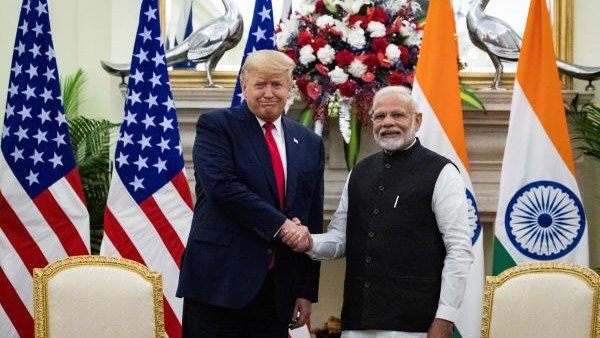
The United States and India have reached a significant trade understanding that marks a major shift in their economic and strategic relationship. Under the proposed deal, the US will cut tariffs on Indian goods to 18 per cent, easing trade pressures that had built up over recent months. The announcement was made by US President Donald Trump following discussions with Indian Prime Minister Narendra Modi, signalling a renewed effort to strengthen ties between the two countries .
A key element of the agreement is India’s reported commitment to end or sharply reduce its purchases of Russian oil. According to President Trump, this move aligns India more closely with US strategic objectives, particularly in the context of global efforts to isolate Russia over the Ukraine conflict. In return, Washington has agreed to roll back additional punitive tariffs that had been imposed on Indian imports, consolidating them into a single 18 per cent rate .
The tariff reduction is expected to benefit Indian exporters across multiple sectors, while also improving investor confidence. Markets reacted positively to the news, viewing the deal as a step toward more predictable and stable trade relations. At the same time, the agreement opens the door for increased US exports to India, including energy, defence equipment, and aircraft, as both sides look to expand bilateral trade volumes .
However, some aspects of the deal are still evolving. While US officials have highlighted India’s agreement on Russian oil, Indian authorities have been more cautious in publicly confirming the full details. Analysts note that the long-term impact will depend on how energy sourcing changes and how quickly both countries implement the agreed trade measures. Overall, the deal reflects a broader strategic realignment and underscores the growing importance of the US–India partnership in global economics and geopolitics .