






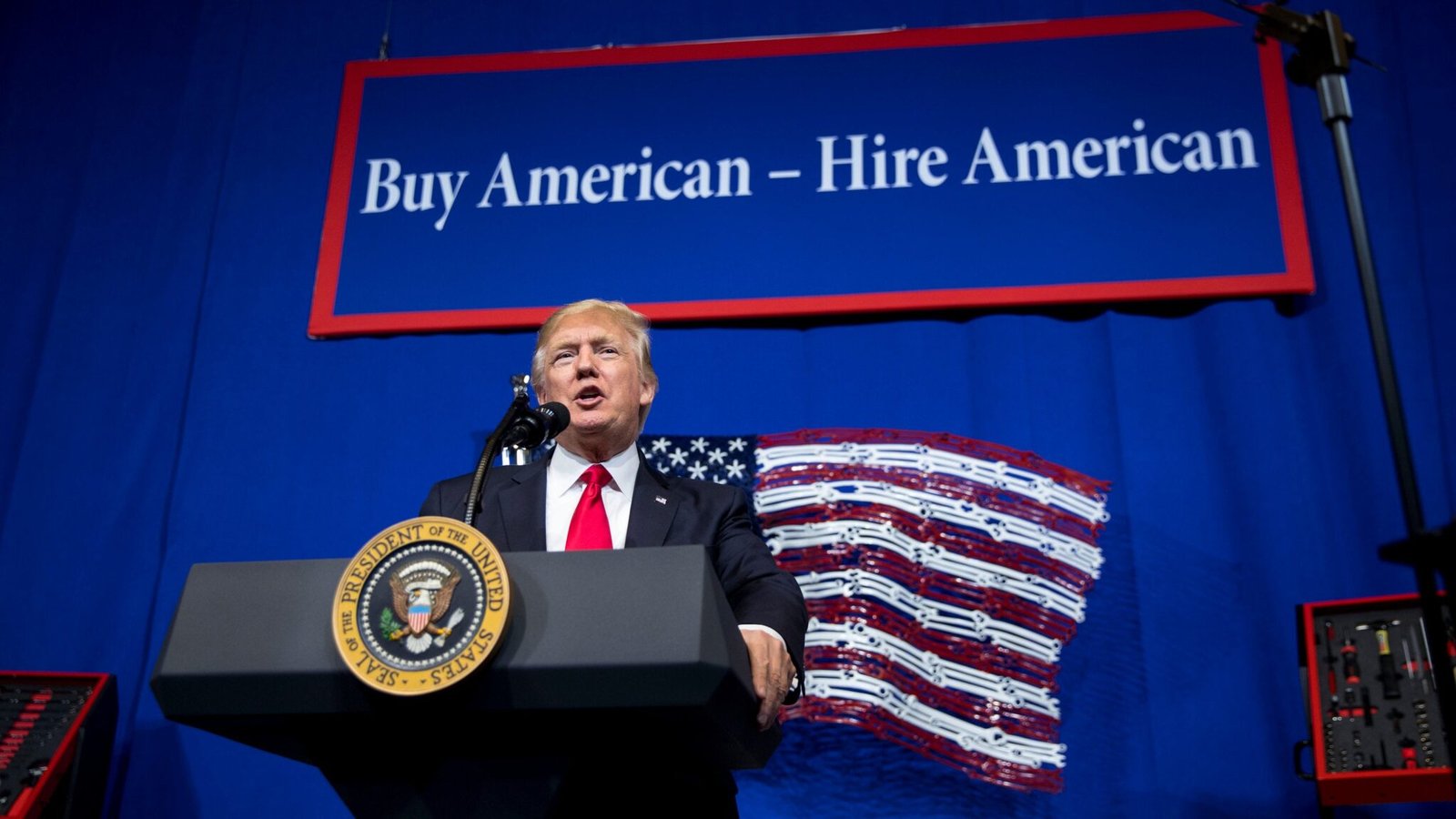
The United States Supreme Court has raised serious questions about the legality of former President Donald Trump’s sweeping tariffs, which were imposed under emergency powers during his administration. During a high-stakes hearing this week, justices from both conservative and liberal wings of the court appeared skeptical of the argument that Trump acted within his legal authority when using a 1977 emergency-powers statute to impose broad tariffs on imports from several countries. The case could have major implications for both U.S. trade policy and the limits of presidential power.
At the center of the legal battle is the International Emergency Economic Powers Act (IEEPA), a law enacted in 1977 that allows presidents to regulate commerce during national emergencies. Trump’s administration invoked this law to impose tariffs on hundreds of billions of dollars’ worth of goods, arguing that the move was necessary to protect national interests. However, the challengers to the policy argue that the IEEPA was never intended to grant presidents unilateral authority to impose tariffs — which are effectively taxes — without congressional approval. They claim the tariffs violate the constitutional separation of powers, as the U.S. Constitution gives Congress the exclusive authority to regulate trade and levy taxes.
Chief Justice John Roberts expressed particular concern during the hearing, noting that the imposition of tariffs amounts to a form of taxation traditionally controlled by Congress. “Tariffs on any product, from any country, in any amount, for any length of time — that’s a broad and unchecked power,” he said, highlighting the risk of setting a dangerous precedent. Justice Amy Coney Barrett pressed the government to cite historical examples where such sweeping authority had been granted, while Justice Ketanji Brown Jackson observed that the statute was “designed to limit presidential authority, not expand it.” These questions indicate the Court’s growing unease with the expansion of executive power over economic policy.
If the Supreme Court rules against the Trump administration, it could invalidate one of the most consequential aspects of his trade agenda. The tariffs, which targeted imports from China, the European Union, and other countries, generated billions in revenue but also sparked retaliatory measures and disrupted global trade. A ruling against Trump’s tariffs could force the U.S. Treasury to issue massive refunds — estimated to be between $750 billion and $1 trillion — to affected businesses and importers. Such an outcome would also send a clear message that presidents cannot rely on emergency powers to impose sweeping economic measures without explicit authorization from Congress.
On the other hand, if the Court upholds Trump’s use of emergency powers, it would set a powerful precedent expanding presidential control over trade policy. Future administrations could interpret the ruling as permission to bypass Congress in similar economic matters, fundamentally reshaping how the U.S. approaches tariffs, trade negotiations, and sanctions. Legal experts have warned that such an expansion of executive authority could weaken the system of checks and balances that defines American governance.
Beyond the legal ramifications, the case has major economic and political implications. Businesses and consumers have borne much of the cost of the tariffs through higher prices on imported goods, while global supply chains have struggled to adapt. Economists estimate that U.S. households paid an additional $1,200 annually on average as a result of the tariffs. The uncertainty surrounding the case has also unsettled international markets, as global partners wait to see whether the United States will reaffirm its commitment to stable trade policy or continue down a path of unilateral economic action.
The Supreme Court’s decision is expected by mid-2026, but its outcome could redefine the balance of power between the executive and legislative branches. If the justices strike down Trump’s tariff authority, it will serve as a constitutional reaffirmation that Congress—not the president—controls taxation and trade. But if the Court rules in favor of Trump, it will grant the presidency a level of economic power unseen in modern American history. Either way, the ruling will shape not only the legacy of Donald Trump’s economic policies but also the future boundaries of presidential authority in the United States.